
Guide
How fast do electric scooters go?
It depends entirely on the age class. Small kids' scooters top out around 5 to 6 mph, tweens run 10 to 12.5 mph, teens run about 15.5 mph, and adult commuter scooters usually run 15 to 20 mph, with a small performance tier at 28 mph and up. Local law usually caps public-road speed well below what the hardware can do.
Speed by age class, at a glance
| Rider class | Typical top speed | Example |
|---|---|---|
| Ages 3 to 5 (starter) | about 5 mph | Gyroor KS2 ($99.99), 5 mph rated |
| Ages 6 to 7 (kick-to-start) | about 6 to 10 mph | Heyscoot ages 6-14 ($129.99), 10 mph rated |
| Ages 8 to 9 | about 10 mph | same class, lower speed setting |
| Ages 10 to 12 | about 10 to 12.5 mph | step-up big-kid electrics |
| Ages 13 to 15 (teen) | about 15.5 mph | Segway Ninebot E2 Plus ($229.99), 15.5 mph rated |
| 16 and up | 15.5 to 19 mph where allowed | VOLPAM 350W/500W ($159.99), 19 mph rated |
This is a convention drawn from how the major kids' lines actually rate their scooters by age, not a legal standard. Always match the scooter's rated top speed and the child's coordination, not just the age printed on the box.
Where the adult tiers land
Most adult commuter scooters cluster at 15.5 to 20 mph, which is the sweet spot for city riding and the range most local speed caps allow. A smaller "performance" tier of scooters runs 25 to 31 mph, like the isinwheel GT1 ($474.99) rated at 28 mph. Those are almost always faster than what public roads and paths legally permit, and they need a heavier duty helmet, better brakes and more rider experience to use safely at all.
Genuinely note: box-stated top speeds assume a rider around 165 lb, flat ground, warm weather and eco mode off. A heavier rider or cold weather will not hit the printed number.
Legal speed caps usually sit below the hardware limit
Most states and cities cap electric scooters somewhere between 15 and 20 mph on public roads, regardless of what the motor can physically do. That means a scooter's advertised top speed and the speed you are legally allowed to ride it at can be two different numbers. Many scooters also ship with selectable speed modes (eco, normal, sport) precisely so a rider can stay within a local cap without buying a slower scooter. Always check your specific state and city rules, since caps vary and some cities set a tighter limit than the state does.
What each speed actually feels like
Numbers on a spec sheet do not always translate to a feel. At 10 mph, a scooter feels close to a brisk jog, easy to stop suddenly and forgiving of mistakes. At 15 mph, roughly 22 feet per second, reaction time to a pothole or a car door shrinks noticeably and most new riders describe it as the point where scootering starts to feel like a real vehicle rather than a toy. At 20 mph and up, wind resistance becomes noticeable, small pavement flaws feel bigger, and braking distance stretches enough that following distance and scanning ahead matter a lot more. At 28 mph and up, a fall carries real-world impact energy similar to a low-speed motorcycle spill, which is why gear and rider experience should scale with speed.
Matching a helmet to the speed
| Speed range | Helmet type |
|---|---|
| Under 15 mph | CPSC certified bike helmet |
| Skatepark or stunt riding | dual certified: CPSC + ASTM F1492 |
| 20 mph and up | NTA 8776 rated or full-face |
| 28 mph and up | full-face; many riders choose a DOT rated helmet |
MIPS is a rotational-impact liner worth looking for at any speed tier, and any helmet involved in a crash should be replaced regardless of how it looks afterward.
Age is a convention, not a guarantee of ability
The age bands above come from how the major kids' scooter lines actually rate their products, not from a safety test tied to a specific child. A cautious 9 year old and a confident 12 year old can have very different comfort levels with the same top speed. Match a scooter's rated speed to the child's actual coordination and experience with a kick scooter first, and start any new speed tier in a driveway or empty lot before a park or path.
Scooters across the speed range


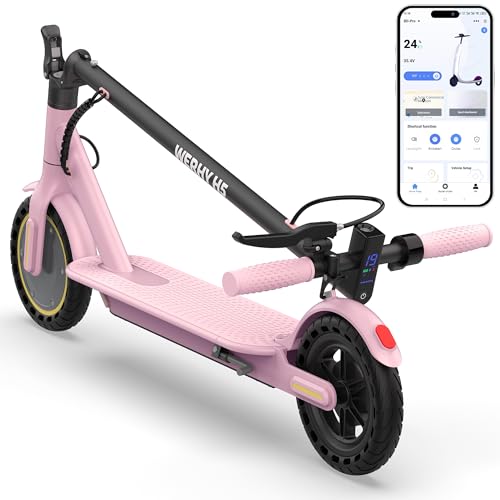
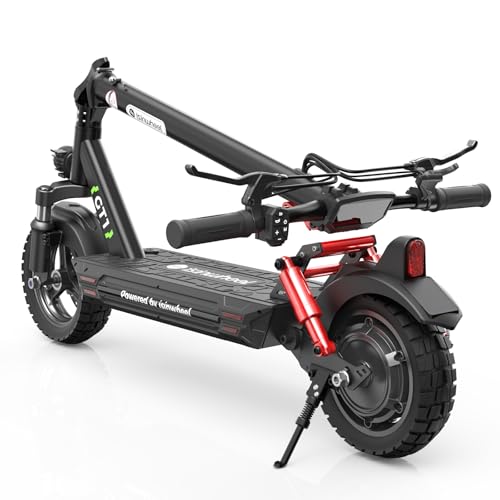

Prices change often; the button shows today's price on Amazon.
More guides
- Are electric scooters good for commuting?
- Electric scooter battery and charging safety
- Do you need a helmet on an electric scooter?
- Electric scooter laws, explained in patterns
- Electric scooter tires and maintenance
- Electric scooters for college campus
- How to ride an electric scooter safely
- Going from a scooter to a skateboard
- Will an electric scooter go up a hill?
Questions riders ask
What speed is normal for an adult commuter scooter?
Most adult commuter scooters are rated 15.5 to 20 mph, which lines up with the most common local speed caps of 15 to 20 mph. That range feels brisk but controllable on bike lanes and paths. Scooters advertised past 25 mph are a separate, faster performance tier meant for open private roads or off-road use, not typical street commuting.
How fast should a scooter be for a 10 year old?
Around 10 to 12.5 mph is the common convention for the 10 to 12 age band, based on how the major kids' lines rate their scooters. That is faster than a 6 to 9 year old's scooter but well under teen and adult speeds. Always confirm the specific model's rated top speed rather than assuming from the age printed on the box.
What does 15 mph on a scooter actually feel like?
Faster than most people expect the first time. At 15 mph a scooter covers about 22 feet per second, roughly a car length every half second, so reaction time to potholes, pedestrians or car doors shrinks fast. Most riders find 15 mph comfortable on a straight bike lane and want to slow down noticeably for turns, crowds or wet pavement.
Do I need a different helmet for a faster scooter?
Yes. Under 15 mph, a standard CPSC certified bike helmet is appropriate. At 20 mph and up, look for NTA 8776 rated or full-face protection. At 28 mph and up, many riders choose a DOT rated motorcycle helmet instead of a bicycle helmet, because impact energy rises fast with speed. Replace any helmet after a crash regardless of speed.
Why does my scooter not hit its advertised top speed?
Box speeds are usually measured with a rider around 165 lb, on flat ground, in warm weather, with eco mode off. Real riders are heavier, ride on imperfect pavement, and often ride in cooler temperatures, all of which quietly shave a few mph off the printed number. Expect something close to the claim on flat ground in mild weather, and less in every other condition.
Wear a helmet every ride, and check your state and city rules on age, speed and where scooters may ride. This page is researched guidance, not professional, legal or medical advice. Specifications come from each product listing and can change; confirm on the listing before you buy.