
Best picks · three tiers
Best electric scooters for commuting
The NAVEE V25 Pro at $279.99 fits most commutes: a 600W motor, 19 mph claimed top speed and suspension on 10 inch tires for a route with a mix of flat ground and moderate grades.
Picks by budget: beginner, intermediate and expert
Hiboy S2 Lite Electric Scooter

$238.13 · 250W · 13 mph · 10.6 mi claimed · 180 lb max · 6.5 in wheels
Who it is for: Short, mostly flat commutes where portability and price matter more than range.
The Hiboy S2 Lite is light and foldable, with a 250W motor claiming 13 mph and 10.6 miles on a 180 lb max load, an easy scooter to carry onto a train or up an office elevator.
Skip it if: Commutes over two or three miles, anyone near the 180 lb limit, or routes with more than a gentle slope.
Check price on Amazon Full specsNAVEE V25 Pro Electric Scooter for Adults
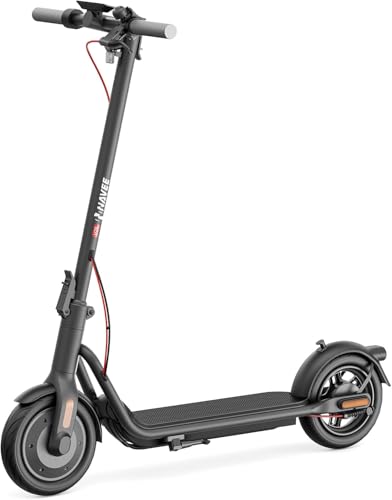
$279.99 · 600W · 19 mph · 15.5 mi claimed · 265 lb max · 10 in wheels
Who it is for: Daily commuters who want one scooter that handles a mixed route without upgrading later.
The NAVEE V25 Pro's 600W motor and suspended 10 inch tires are the buy-once sweet spot for commuting: enough power for moderate hills, enough comfort for rough pavement, and a claimed range that covers most round trips with charge to spare.
Skip it if: Riders with genuinely steep hills on the route, who should look at the expert tier below instead.
Check price on Amazon Full specsSegway Ninebot MAX G2 Electric KickScooter

$749.99 · 1000W · 22 mph · 43 mi claimed · 10 in wheels
Who it is for: Longer commutes or routes with real hills where a smaller motor would sag every day.
The Segway Ninebot MAX G2 runs a 1000W motor to a claimed 22 mph and 43 miles, power that holds speed on grades that stall smaller scooters and range that turns a daily commute into a once-every-few-days charging chore.
Skip it if: Say plainly: short flat commuters, apartment dwellers with narrow stairwells (it is a heavier scooter), and anyone who does not want to pay for range and power they will not use daily.
Check price on Amazon Full specsAlso worth a look


Prices change often; the button shows today's price on Amazon.
What's the best electric scooter for commuting?
The right commuter scooter depends on distance and terrain more than brand. Under two miles on flat ground, a light 250W scooter you can carry indoors is enough. Longer routes or anything with a real hill call for 500W or more so the motor is not straining on every trip. The tiers above split that decision into a light budget option, a buy-once middle pick and a long-range, hill-capable ceiling pick.
What about commuting with hills?
Motor wattage is the deciding factor. Based on a roughly 210 lb rider and scooter on a 10 percent grade, a 350W motor holds about 5.5 mph, a 500W motor about 7.5 mph, and a 1000W motor about 14 mph; a 350W motor only holds 8 mph up to roughly a 6 percent grade before it sags further. If your commute has a real hill rather than a gentle slope, budget-tier 250 to 350W scooters will noticeably slow down every single day, which gets old fast. The 600W NAVEE V25 Pro and 1000W Segway MAX G2 above are both built with hill-capable margin; see our hill climbing guide and the hill climb calculator for your specific grade.
How we chose these scooters
Nobody rode these scooters as part of writing this page. Picks come from the manufacturer's stated motor power, top speed, claimed range and weight limit, checked against certifications the brand states, and weighed against recurring patterns in verified owner reviews, particularly complaints or praise about hill performance and daily fold routine, since those matter more for commuting than for occasional weekend riding.
Is a commute actually cheaper on a scooter?
For a typical 4 mile each-way commute, 5 days a week, that is roughly 1,920 miles a year. Driving that same distance at 27 mpg and $3.40 gas, plus $8 daily parking, runs about $2,350 a year. A scooter's electricity and upkeep for the same mileage costs around $65 a year, with a full charge itself costing 5 to 11 cents at typical electricity rates, well under a penny per mile. Run your own commute numbers on the commute savings calculator.
Buying tips for commuters
Weigh the fold mechanism and carry weight as heavily as range if you take the scooter indoors, onto transit or up stairs daily; a scooter you dread folding gets left at home. Confirm the max load with real margin against your weight plus a bag or laptop. Buy only UL 2272 listed scooters, and charge on a hard surface with the maker's charger, never overnight unattended near an exit even on a work night when you are in a hurry.
How the picks compare
| Beginner | Intermediate / Top Pick | Expert | |
|---|---|---|---|
| Motor | 250W | 600W | 1000W |
| Top speed (claimed) | 13 mph | 19 mph | 22 mph |
| Range (claimed) | 10.6 miles | 15.5 miles | 43 miles |
| Suspension | none | front | check listing |
| Price | $238.13 | $279.99 | $749.99 |
The picks, side by side
Including the helmet that suits this rider: no scooter setup is complete without one.


Prices change often; the button shows today's price on Amazon.
More roundups
- Best electric scooters for heavy adults
- Best electric scooters for hills
- Best electric scooters for kids
- Best electric scooters under $500
- Best full face helmets for electric scooters
- Best long range electric scooters
Get these picks and prices by email
One page with every item and its current price, so you can budget the whole setup, helmet included, before you buy any of it.
Used only to send the list. You can also just read it on this page.Questions riders ask
Are electric scooters good for commuting?
Yes, for routes under about five miles with reasonable road or bike lane access. They fold for transit or office storage, cost only a few cents per mile to charge, and beat driving on cost for a typical short commute. The tradeoffs are weather exposure, real-world range running 60 to 80 percent of the claimed number, and the need to check your city's rules on where scooters can legally ride.
What size motor do I need for commuting with hills?
If your route includes a real hill rather than a gentle slope, look for 500W or more; a 350W motor holds only about 5.5 mph on a 10 percent grade and starts sagging on anything over about a 6 percent grade even at 8 mph. A 1000W motor holds closer to 14 mph on the same 10 percent grade, which matters if you are commuting the same hill twice a day.
How far can I really commute on one charge?
Take the claimed range and multiply by 0.6 to 0.8 for a realistic number, then subtract another 10 to 20 percent if you are riding below 50 F. A scooter claiming 25 miles is realistically 15 to 20 miles in daily commuting conditions, which still covers most round trips under 8 miles with margin.
Is commuting by scooter actually cheaper than driving?
For a 4 mile each-way commute five days a week, driving costs around $2,350 a year in gas and parking at typical rates, while the scooter's electricity and upkeep for the same distance runs about $65 a year. The scooter itself is the main upfront cost, but it is typically paid back within the first year or two of a real commute.
What helmet should I wear commuting?
A CPSC-certified bike helmet covers the 13 to 22 mph range of scooters in this list; the DKONI Bike Helmet at $36.98 adds front and back LED lights, which matter more for commuting than for weekend riding since you are more likely to be out at dusk or in traffic. Wear it every ride, and check your state and city helmet laws, since many require one under 18 regardless of scooter type.
Wear a helmet every ride, and check your state and city rules on age, speed and where scooters may ride. This page is researched guidance, not professional, legal or medical advice. Specifications come from each product listing and can change; confirm on the listing before you buy.