


Calculator
Electric Scooter Hill Climb Calculator
Yes, an electric scooter will go up a hill if the motor has the power for the weight and grade. A 350W scooter carrying 210 lb of rider and scooter holds only about 5.5 mph on a 10 percent grade on rated power; a 500W motor holds about 7.5 mph and a 1000W motor about 14 mph. Short hills can use peak power, long ones cannot.
Hill climbUpdates as you type
Crawls up; expect to kick-assist: about 5.5 mph on rated power
- Hill
- 10% grade (5.7 degrees)
- Speed on rated power (long hills)
- 5.5 mph
- Speed on peak power (short bursts)
- 10.5 mph
- Steepest grade held at 8 mph
- 6.2%
- Total climbing weight
- 210 lb
Physics estimate. Controllers cap current at low speed and motors heat on long climbs, so real hill speed can be lower; a sticker climb grade (for example 20%) is usually measured with a light rider.
Hill-capable scooters: 500W rated and up
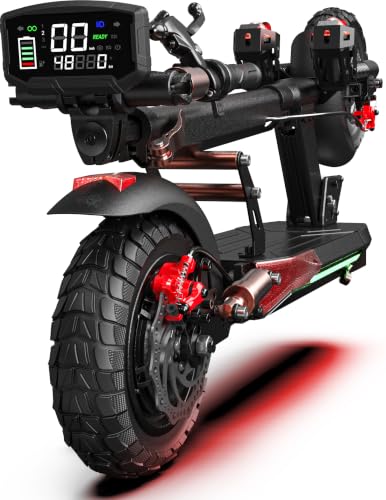


Prices change often; the button shows today's price on Amazon.
This calculator estimates the speed a scooter can actually hold on a hill, based on its rated motor wattage, the hill's grade, and your combined rider and scooter weight. Sticker claims like "climbs a 20% grade" almost always assume a light rider and don't tell you what speed you will hold there. Enter your numbers to get a realistic climbing speed instead of a marketing claim.
How the climbing estimate works
The estimate is built from measured relationships between rated (continuous) motor power, grade percentage and combined weight. At a 10 percent grade with a 210 lb combined rider and scooter weight, a 350W motor holds about 5.5 mph, a 500W motor about 7.5 mph, and a 1000W motor about 14 mph. A 350W motor only holds a brisk 8 mph up to roughly a 6 percent grade before it starts slowing measurably. Heavier combined weight reduces these speeds further, and steeper grades reduce them faster than the relationship looks linear.
A worked example
A 500W rated scooter, ridden by a 180 lb rider (roughly 210 lb combined with the scooter), hits a 10 percent grade hill on the commute. The calculator estimates about 7.5 mph up that hill, versus whatever speed the scooter holds on flat ground, often 18 to 20 mph. That is a real drop, but it is normal and predictable physics, not a sign anything is wrong with the scooter. A rider considering a daily hill like this might instead look at an 800W to 1000W rated scooter to hold a faster, more comfortable climbing speed.
What this estimate does not capture
This model uses rated (continuous) wattage, not peak wattage; a listing's "350W/800W peak" spec will climb closer to the 350W line on anything longer than a very short, steep block. It also does not account for tire type: pneumatic tires grip a climb better than solid tires, which can slip slightly under load, especially on wet or gravelly pavement. And it assumes a straight, steady grade; a hill with a steeper pitch partway up will slow the scooter more than the average grade suggests.
More calculators
Rider matchEnter the rider: age, height, weight, commute, hills and budget. Get the scooter class they need, the battery,...Range estimatorEstimate real electric scooter range from battery Wh, rider weight, speed, hills, temperature and tire type, u...Weight headroomAdd rider, backpack and cargo, compare against the scooter max load, and see the headroom, the range you lose,...Charging and costHow long an electric scooter takes to charge and what it costs: charger watts, battery Wh and your electricity...Commute savingsCompare a scooter commute with driving or transit: fuel, parking, fares, electricity and wear per year, and ho...Kids scooter sizeEnter a child age and height to get the right scooter type (3-wheel, 2-wheel kick, pro or electric), the handl...Pro scooter sizeRider height and riding style in, pro scooter total height and bar height out, with the bar-height chart rider...Helmet sizeMeasure head circumference, pick the kind of riding, and get the helmet size, the certification that riding ca...
Questions riders ask
Why does the calculator ask for rated power instead of peak power?
Rated (continuous) power is what a motor can sustain for the length of a real climb, typically a minute or more. Peak power is a short burst the motor can produce for a few seconds on a steep pitch, and it cannot be held for a sustained climb. Using peak power would give an overly optimistic hill speed estimate that does not match what actually happens partway up a real hill.
How much does my weight change the hill climb estimate?
Meaningfully. The baseline figures assume a 210 lb combined rider and scooter weight. A heavier rider pushes more mass uphill against the same motor output, lowering climbing speed further, in addition to the range loss the same extra weight causes on flat ground. Enter your actual weight for a more accurate number than the baseline figures alone.
Does a steeper grade always mean a proportionally slower climb?
No, the relationship is not perfectly linear; speed tends to drop off faster as grade increases past a certain point for a given motor. That is why a 350W motor holds a solid 8 mph up to about a 6 percent grade but only about 5.5 mph at a 10 percent grade, a bigger drop than the percentage difference in grade alone would suggest.
Should I trust a listing's "climbs a 20% grade" claim over this calculator?
Treat the listing's claim as "can technically get up that grade," usually at low speed and assuming a light rider, and treat this calculator's estimate as "what speed I will actually hold there with my real weight." The two answer different questions, and the calculator's estimate is the more useful one for planning an actual commute or ride.
Wear a helmet every ride, and check your state and city rules on age, speed and where scooters may ride. This page is researched guidance, not professional, legal or medical advice. Specifications come from each product listing and can change; confirm on the listing before you buy.