Best picks · three tiers
Best smart helmets with lights
The Lumos Ultra at $139.95 is the best all around smart helmet: CPSC and MIPS certified with 360 degree TUV rated LED visibility and handlebar controlled turn signals.
Picks by budget: beginner, intermediate and expert
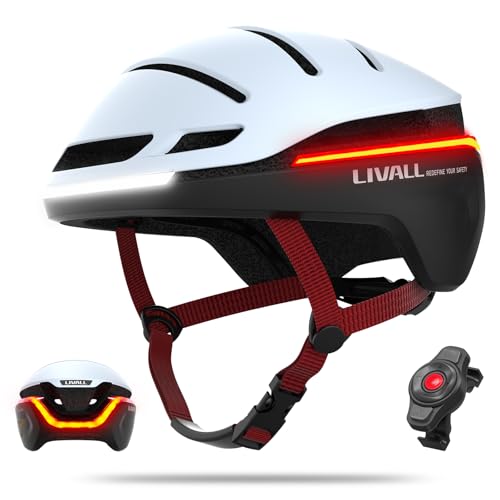
LIVALL L23 Smart Bike Helmet with LED Lights & Removable Visor

$89.99 · fits 58-60 cm · CPSC
Who it is for: Riders who want lights on the helmet itself without paying for full app connectivity or turn signals.
The LIVALL L23 is CPSC certified, fits 58 to 60 cm heads, and adds LED lights with a removable visor for $89.99. It gets you a lit helmet at close to the price of a plain one.
Skip it if: Riders who specifically want turn signals; the L23 has lights but not the signal function LIVALL's pricier models add.
Check price on AmazonLumos Ultra Bike Helmet TÜV 360˚ Visibility LED Lights
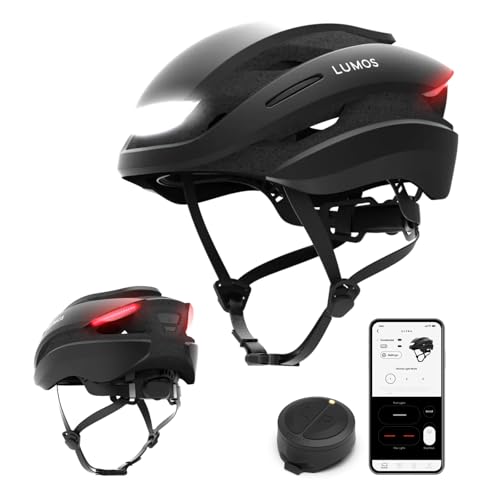
$139.95 · CPSC · MIPS
Who it is for: Daily commuters who want CPSC, MIPS, and real turn signals in one helmet without going to the e-bike certified tier.
The Lumos Ultra adds MIPS rotational protection and TUV rated 360 degree lighting with turn signals for $139.95, and covers scooters up to about 20 mph without needing a heavier speed pedelec certification.
Skip it if: Riders on scooters that regularly hit 25 mph or more; step up to the NTA 8776 certified model instead.
Check price on AmazonLumos Ultra E-Bike Smart Helmet

$229.95 · fits 54-61 cm · CPSC · MIPS
Who it is for: Riders on 25 to 28 mph scooters or e-bikes who want the highest certification available in a lit, smart helmet.
The Lumos Ultra E-Bike is NTA 8776 certified, the Dutch standard for speed pedelecs up to 28 mph, on top of CPSC and MIPS, and adds a retractable face shield to its front and rear LED lighting and turn signals, all app controlled, for $229.95.
Skip it if: Riders on scooters capped at 15 to 18 mph; the extra weight, shield, and price are not needed at that speed.
Check price on AmazonAlso worth a look


Prices change often; the button shows today's price on Amazon.
How we chose these helmets
Nothing here was worn or tested in person. Picks come from manufacturer specifications, printed certifications (CPSC, MIPS, NTA 8776), and recurring themes in verified owner reviews about light brightness, app reliability, and battery life. Where a manufacturer did not state a spec, we note that instead of assuming it.
What makes a helmet "smart"
A smart helmet adds electronics on top of the certified foam and shell: LED lights that run brighter and longer than a strapped on clip light, turn signals triggered from a handlebar remote or your phone, and in some models like the LIVALL MT1 Neo, Bluetooth speakers, a microphone, and fall detection that can alert a contact if you go down. None of that replaces the CPSC certified shell doing the actual impact protection; it is added visibility and convenience on top of it.
Turn signals and 360 degree lights: do they actually get you seen?
A scooter rider is roughly car mirror height and about a third as wide as a bike with panniers, which is exactly the profile drivers scan past at intersections. Handlebar triggered turn signals on helmets like the LIVALL EVO21 replace the hand signal you cannot safely make one handed on a scooter throttle, and 360 degree lighting covers the side angles a standard front and rear light miss. This matters most at dawn, dusk, and night riding in traffic; it matters least on a car free bike path in daylight.
MIPS and certification: the part that is not a gadget
Every helmet on this page starts from CPSC 16 CFR 1203 certification, which is the bike helmet impact standard required in the US regardless of how many lights are bolted on. MIPS is a thin layer inside the shell that lets it rotate slightly on an angled impact, cutting rotational force to the brain in the glancing falls that are far more common than straight down hits. The Lumos Ultra E-Bike goes a step further with NTA 8776 certification, built for speed pedelecs up to 28 mph, which matters if your scooter is rated anywhere near that range.
Battery life and charging
| Helmet | Feature set | Price |
|---|---|---|
| LIVALL L23 | LED lights, removable visor | $89.99 |
| Lumos Ultra | 360 LED, turn signals, MIPS | $139.95 |
| LIVALL MT1 Neo | Speakers, mic, fall detection, turn signals | $115.99 |
| Lumos Ultra E-Bike | NTA 8776, face shield, front/rear LED, turn signals | $229.95 |
All of these charge over USB like your phone; check the listing for the exact charge time and rated hours of light, since manufacturers publish those numbers and they change between model years.
Buying tips
Measure your head about an inch above the eyebrows and check the fit range printed on the listing before buying; a smart helmet that sits loose will not seat its light array correctly either. Wear it every ride, charge it like your phone before it dies mid commute, and replace the helmet after any crash even though the electronics probably still work, since the foam liner underneath does not reset after an impact.
The picks, side by side
Prices change often; the button shows today's price on Amazon.
More roundups
- Best toddler helmets
- Best toddler scooters
- Best electric scooters under $200
- Best electric scooters under $1,000
- Best electric scooter helmets
- Best electric scooters for heavy adults
Get these picks and prices by email
One page with every item and its current price, so you can budget the whole setup, helmet included, before you buy any of it.
Used only to send the list. You can also just read it on this page.Questions riders ask
Do smart helmet lights replace a bike headlight?
They add visibility, especially from the side where a standard front and rear light does not reach, but they should not be your only light source at night. Pair a smart helmet with your scooter's built in lights, and add a separate light if your scooter's stock lighting is dim, which is common on budget models.
How do the turn signals work?
Most models use a small remote you mount on the handlebar or a companion phone app; pressing left or right activates blinking LEDs on that side of the helmet. It replaces the hand signal you cannot safely make while holding a scooter throttle, and it is visible to drivers approaching from behind at a stop or intersection.
Are these helmets waterproof?
Most smart helmets are rated for rain and splashes but not submersion, since the shell and foam are the same certified materials as a standard bike helmet with electronics sealed inside. Check the specific listing for an IP rating; avoid fully submerging the helmet or leaving it in standing water.
Is MIPS worth the extra cost on a smart helmet?
Yes, if you are commuting daily in traffic. MIPS addresses the rotational force from glancing, angled falls, which are more common than straight down impacts and are not what a standard CPSC shell alone is optimized to reduce. It adds modest cost and no meaningful weight.
What happens to the electronics if I crash?
Replace the helmet regardless of whether the lights still turn on, because the foam liner absorbs and permanently compresses on impact even when the shell looks fine from outside. The electronics surviving a drop tells you nothing about whether the certified impact protection underneath is still intact.
Wear a helmet every ride, and check your state and city rules on age, speed and where scooters may ride. This page is researched guidance, not professional, legal or medical advice. Specifications come from each product listing and can change; confirm on the listing before you buy.